You know a thing or two about selecting a guitar now, so you're ready to run out and emulate your favorite guitar icon now, right? Well, not so fast there Robert Johnson*.
There is so much more to getting "the sound." First, an amp. Second, effects. Sprinkle with liberal amounts of mojo and carry on. In this post and the next, I'm going to talk about amps and effects.
Today, I'm going to assume that clean signals are equal (which they in no way are) and talk about effects.
Starting with the recording of Rocket 88 -- considered by most to be the first rock and roll song-electric guitarists have been looking for ways to modify their sound. Some want a unique sound to define their sound, some want a sound to match the mood of the song. Eventually, as the guitar gained prominence as the main instrument, effects began to define the style of music. Country music has a distant, jangle and employs the unmistakable whine of the steel guitar. Disco used relatively clean guitars while getting the well-known "waka waka" sound by heavily using a wah pedal. Metal uses heavy amounts of distortion, using both overdriven amps and outboard pedals.
As time and technology has pressed on, so has the amount of gear a guitarist uses. As always, click on the images to get a full-size picture.
 |
| Johnny Ramone's guitar rig image is from Guitar Geeks. For the image in the context of it's original page, click here. |
It was very common for early punk and hard rock artists to use the amp's distortion and then add outboard effects as necessary. This practice is not quite as common today among rock artists but many heavy metal guitarists enhance amp overdrive with external distortion.
Paul Gilbert, of Racer X and Mr. Big fame, is another effects minimalist, though he is of the school of old. His set-up is a great example of using the amp's natural overdrive and clean channels and modifying that sound with external effects. He uses a wah, phaser, chorus and delay to get all the sounds in his arsenal.
 |
| Paul Gilbert's guitar rig image is from Guitar Geeks. For the image in the context of it's original page, click here. |
This is by no means an inclusive list of effects, but I should probably run down a few of the more popular effects to give you an idea of what they do.
Distortion: Literally distorts a clean signal. It modifies the waveform of a signal by introducing odd harmonics. Some amplify the signal greatly (overdrive) or clip the peaks to impart a dirty, chunky sound. They vary in sound from the "fuzz" guitar of the '60s to the stomping thud of Pantera.
Interestingly, fuzzy guitar was first used in the song Rocket 88. As the story goes, the amp they were using broke and Sun Records producer Sam Phillips liked it and went ahead and recorded it. Since then, many guitarist have slashed speakers to get their distortion. Pete Townsend of The Who and Tony Iomi of Black Sabbath are probably the most famous examples of this practice.
Delay: A delay effects produces a copy of the signal going through and reproduces is either once (slap) or multiple times (echo). Most of these delay effect parameters can be set to either create a light echo effect similar to a reverb, a sharp, direct repeat of what is being played, a slow volume-decaying echo, or various other effects. Delay is one of the most essential effects of the modern guitarist.
Vocalists have also been known to rely on this effect. Remember this the next time you listen to Jane's Addiction.
Chorus: Also creates a copy of the signal being played, but the delay time is so short that you can't hear a separation in the sound. So, the signal comes out sounding thicker, as though more than one instrument is playing. A Flange effect is similar, but creates a more liquid sound.
Phaser/Phase Shifter: Creates a "whooshing" sound in the signal. It sounds like its lightly vamping in the signal you're playing. This effect can usually be modified from light to severe.
Wah Wah Pedal: This pedal modifies the amount of a signal's frequency coming through, by use of a foot operated pedal. As the guitarist rocks the expression pedal back and forth, a higher or lower amount of the frequency is allowed through. The most typical sound is a "wah." Think of Jimi Hendrix's intro to "Voodoo Chile" for an extreme example of wah-wah use.
Octavizer: An effect witch creates a synthetic tone for the incoming signal an octave higher or lower. Sometimes, some of these effects have parameters for you to create harmony tones as well, usually called, guess it ... a harmonizer. They allow you to texture and blend different tones and usually, like a chorus, add just enough delay to sound like multiple instruments are playing.
There are a wealth of effects out there, and these barely scratch the surface, but I could spend entire posts detailing individual effects. So, moving on, I want to talk briefly about the difference between stomp boxes, multi-effect pedals and rack effects.
Stomp Boxes
As you can see in the two pictured examples above, both Johnny Ramone and Paul Gilbert use foot switches to change which channel they're playing. Well, a stomp box is similar in that it turns its signal on and off. Usually a stomp box is a single effect that is activated by, well, stomping on it. You control the amount of the effect by the knobs and such on the pedal. The signal is added to your sound by plugging your guitar into the pedal and then running the signal out of the box to the amp. The more effects you have, the more you have to daisy chain plugs before you get to the amp.
Stomp box effects are usually considered superior to multi-effect set-ups. The prices of these pedals reflect this attitude. A well-made, popular pedal can cost from $80-$150. If you want to use a lot of effects, you can see the cost can be prohibitive. However, if you break a box, you only lose one effect, which brings me to...
 |
| Joe Satriani is one of the pre-eminent guitarists of today. You can see that he uses a variety of stomp boxes and rack effects. Joe Satriani's guitar rig image is from Guitar Geeks. For the image in the context of it's original page, click here. |
Partially to offer a budget solution guitarists, partially to clean up the clutter of all those boxes on the floor, companies began offering multi-effect pedals and systems. The most common multi-effect floor systems combine several effects, several different "amp sounds," the ability to dial in your own unique combinations of these effects, multiple pedals to change between effects and sometimes an expression pedal to modify the effect you're using.
The benefits to using a multi-effect system are varied. You don't have a bunch of pedals all over the place. You plug into one device and out to your amp (or other effects, if you want). The cost is almost always cheaper than buying stomp boxes to get all the same effects. And, now, the higher-end multi-effect systems offer digital recording options, computer hookups, drum machines and many other features.
The downside is that most of these systems are considered to have inferior sound in comparison to their stomp box cousins. They also don't tend to be as flexible as the individual effect pedals. However, a lot of this is changing. As technology progresses, the gap is steadily closing. I remember that in the late '80s, no one wanted multi-effect floor effects. Some of them might have been good, but they were looked upon with such disdain, that there were few models around. But today, Digitech's GNX3 and GNX4 are considered the "industry standard" effect systems for the amateur guitarist. The greatest downside is that if you break one of these, you lose EVERYTHING.
 |
| Yngwie Malmsteen is considered by many to have created neo-classic metal. He is certainly one of the most pyrotechnic guitarists around today, even though he occasionally Unleashes the Fookin' Fury. Yngwie Malsteen's guitar rig image is from Guitar Geeks. For the image in the context of it's original page, click here. |
Rack systems are, or were, considered the Holy Grail of effects. They generally have the best technology of their time, are the best built and, logically, cost the most. I say, "were," because now there are a lot of very high-end multi-effect floor systems and single effect pedals. Technology is becoming the great equalizer. The reason the rack effects were considered better, is that they are the ones that tended to contain vacuum tubes. Tube, analog, or A/D effect systems are considered superior by most. Many guitarists like the "warmth" of a tube tone. Personally I think that's bullshit. I think a solid state sounds every bit as good or better than tube amps/effects pre-amp these days. Technology is the great equalizer.
Basically, the rack effects are similar to a stereo component system mounted into a metal rack. These rack components do different things. One might be a multi-effects system that you can use a floor pedal board to change effects. One might just be a delay system. There are line conditioners. There are power conditioners. There are many, many different rack effects out there. And you are going to pay for them.
The upside to rack systems is that they tend to offer the greatest variety of combinations and effects. The downside is that they are generally very expensive, require a rack mount to be very portable, and sometimes require external items to operate well.
Okay, that was really long. I hope you all enjoyed it. Next week I'll tackle some real mojo - amps.
* If you don't know who this is you should be taken outside and be beaten with a brick. But since he's probably the topic of a future BIAAtG, here's a link to some information on this great guitarist.
Here's a consolidated list previous installments of BIAAtG:
Part 15.25; Part 15; Part 14; Part 13; Part 12; Part 11; Part 10; Part 9; Part 8; Part 7; Part 6; Part 5; Part 4.01; Part 4; Part 3.5; Part 3; Part 2; Part 1


 Steve Freakin’ Cropper. That’s who.

 Is she a pretty girl? For sure. But she's A CHILD! I cannot get that idea out of my mind. I can't remember exactly from what movie/show I know her from, but ever since she's hit the scene, I've always felt she was a cute little girl. But that's all I've ever thought, a cute little girl.


 One my first music teachers told me that anyone can be taught to play the guitar. She was right. Just about anyone can be taught the basic chords and how to strum along to the 4/4 time of most popular music. What she didn't say is that very few people become good guitarists. And fewer people still have the motivation, talent and drive to become great guitarists.
 Reid plays aggressive or soft. Heavy metal, soul or jazz. But you know who's fretting the notes because he's distinct in his presentation. He has a wild picking style and his playing may sound sloppy at first, but you soon realize it's intentional. Everything he strums has the exact amount of clarity he envisions. He cleverly pulls back when needed. Some guitarists never realize that sometimes it what you don't play that's important.

 We didn't have any stops planned, but decided to drive Hwy. 167 south until we married up with Hwy. 90 and would stop at any interesting sites along the way. A couple of those stops are for future travelogues, but the stop that probably had the greatest impact on us both was Avery Island.


 Inspired by my last post, I decided to give some props to the McIlhenny Farms' genius product -- Tabasco sauce. There are literally thousands of different pepper sauces sold, but Tabasco maintains it's popularity. Livining up soups, sauces and all matter of other dishes it is an America icon.


 Cruz should be familiar to most movie goers as she has done a number of larger Hollywood films such as Sahara, Gothika, Vanilla Sky, All the Pretty Horses among many others. She also maintains a hectic film schedule in her home country of Spain and throughout Europe. She is also a board certified hottie.

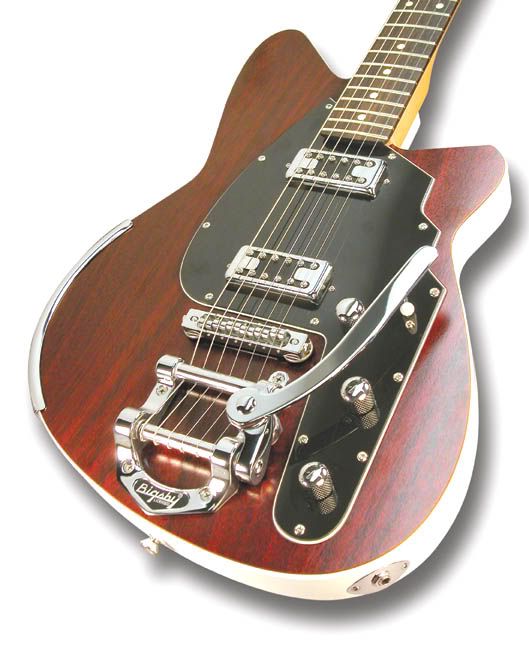 The first commercially successful tremolo/vibrato unit was the Bigsby vibrato tailpiece. It incorporates a spring loaded tremolo arm, or whammy bar that controls the tension of a bar that crosses all six strings. The bar raises or lowers to release or increase tension on the strings causing the pitch to lower or rise.
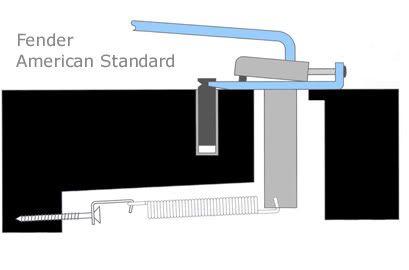 However, Due to these problems, Leo Fender created the synchronized tremolo which popularized the term tremolo (Leo was an engineer, not a musician).
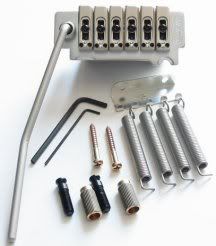 Just about any guitarist you can think of has, at one time or another played a guitar with this style tremolo bridge.
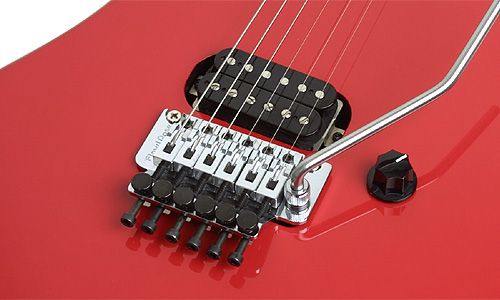 Enter the Floyd Rose double-locking tremolo. This is probably the last truly significant change in tremolo/vibrato technology. While there have been improvements and tweeks, the double locking system revamped, again, the way people approached guitar playing.
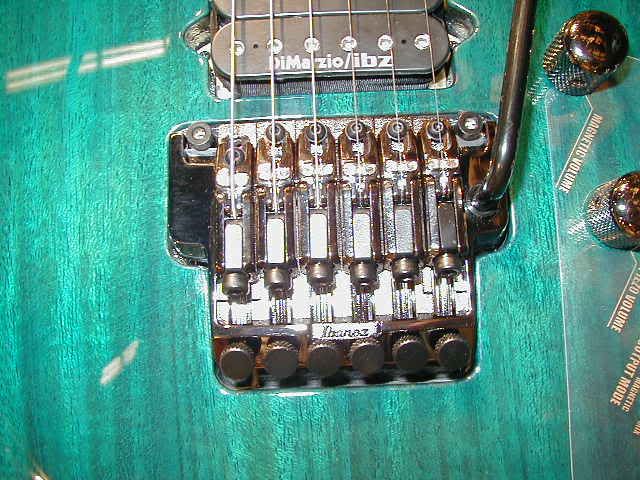 Recently, guitar manufacturer Ibanez introduced the Edge Pro style tremolo. It's very similar to the Floyd Rose style trem, but you don't have to cut the end of the string off and it eliminates many of the sharp edges that the Floyd Rose has.
 I am not the smartest man, nor am I the dumbest. But there are times that something so glaringly obvious hits me square in the middle of the forehead that I wonder how far away I am from the depths of stupidity. The latest entry causing me to question my intelligence is my recent realization that I like Jimmy Page.